It is the first question in any monitoring project: which network will carry the readings? The answer is not purely technical — it drives the running cost over ten years, the battery life of the sensors and the time spent on installation. Here is how to decide.
LoRaWAN: range and battery life, with no subscription
LoRaWAN is a long-range, very low-power radio network. In Europe it uses the licence-free 868 MHz band: no licence, no subscription, no operator.
Its strengths:
- A range of 5 to 10 km depending on the environment, far beyond Wi-Fi or Bluetooth;
- Very low power draw, which lets a battery-powered sensor run for years;
- A per-sensor cost that does not climb: adding sensors adds no subscription cost.
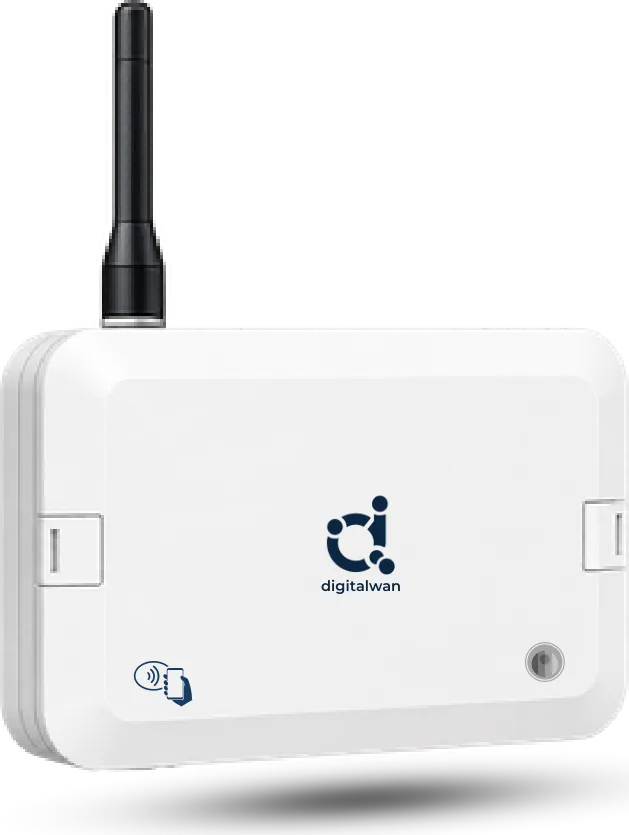
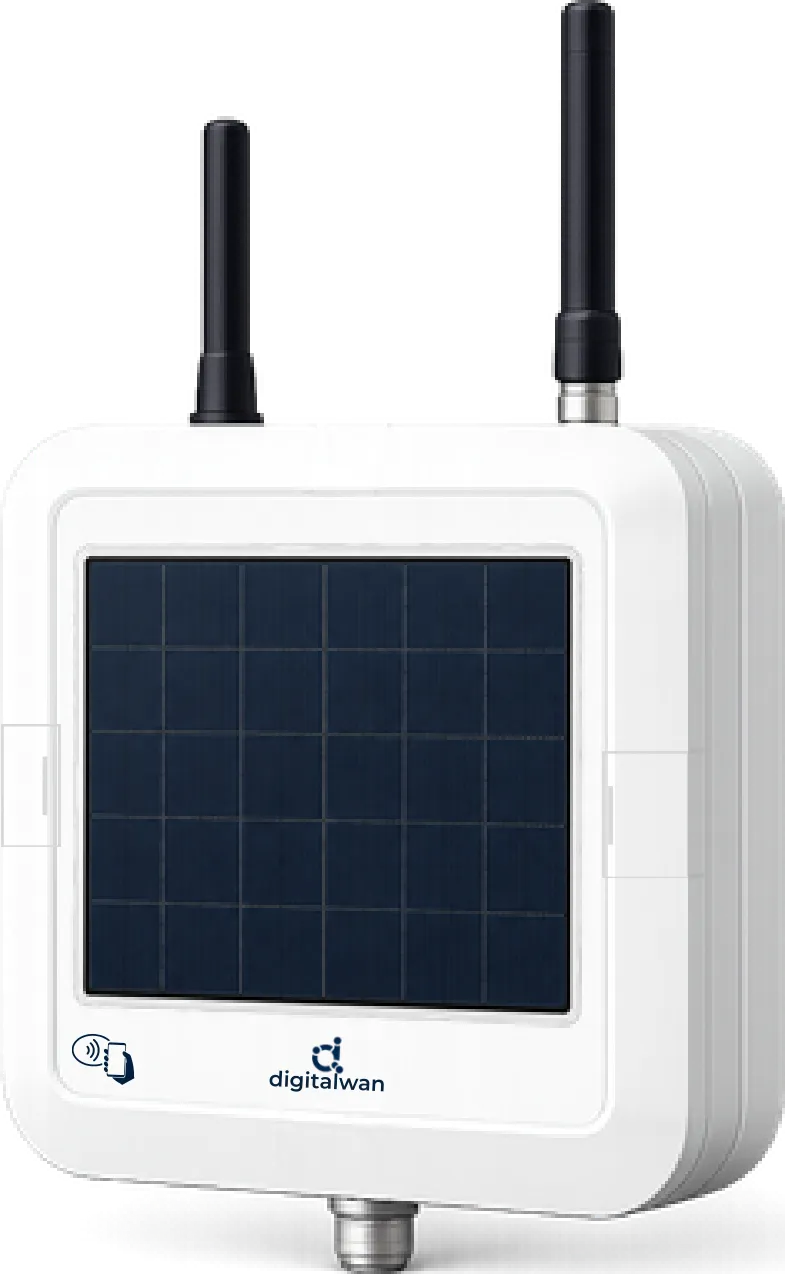
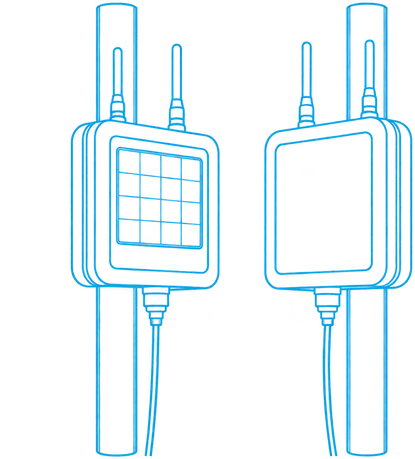
Its constraint: you need a collection point. Either a gateway, such as the MSU-SG7 solar gateway, or a master unit that aggregates several sensors before forwarding them, such as the MSU-MD7. LoRaWAN also means short, infrequent messages: perfect for a level reading or an opening alert, not for a continuous stream.
LTE-M: operator coverage, with no local infrastructure
LTE-M is a variant of 4G built for connected objects: lower throughput, lower power draw, good penetration into buildings and underground structures. Sensors fitted with an eSIM transmit straight to the platform through a mobile operator network.
Its strengths:
- Nothing to install on site: no gateway, no cabling, no network to maintain;
- Immediate deployment across scattered sites, sometimes hundreds of kilometres apart;
- National coverage, with automatic switching between operators when the eSIM is multi-IMSI.
Its constraint: every sensor uses a subscription, and coverage must be checked on site — cover closed, door shut, lid back on. Where LTE-M is not deployed, LTE Cat-1 bis takes over, notably across Africa.
The decision table
| Criterion | LoRaWAN | LTE-M |
|---|---|---|
| Subscription | None | One per sensor |
| Local infrastructure | Gateway or master unit | None |
| Range | 5 to 10 km per gateway | Operator coverage |
| Number of sensors | No limit on the gateway | Limited by the subscription budget |
| Time to go live | Gateway installation | Immediate |
| Best for | Dense sites, many measurement points | Remote sites, scattered measurement points |
Three real-world cases
A pumping station with twenty measurement points. LoRaWAN wins: one gateway on site, twenty sensors around it, no extra subscription. If the site has no mains power, a solar gateway settles the power question.
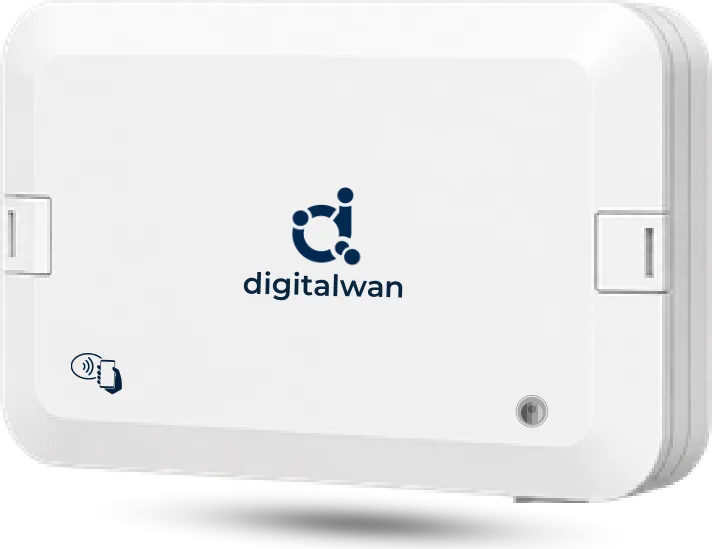
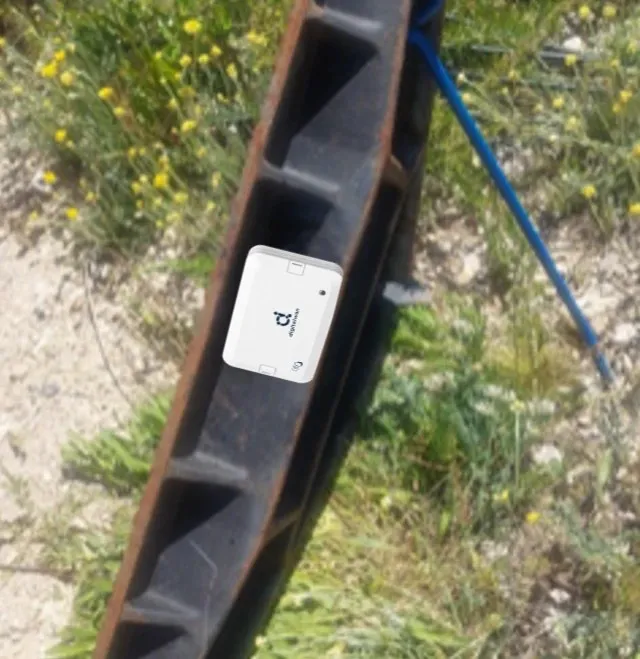
Forty technical cabinets spread across a county. LTE-M is simpler: one self-contained sensor per cabinet, no gateway to install or maintain. The MSU-XD7 standalone unit then reports its alerts directly.
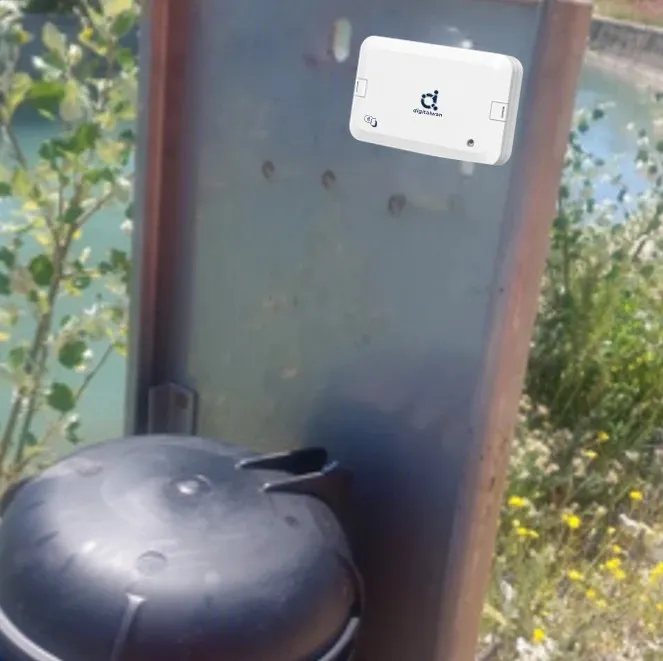
A telecom chamber with two closures and one cover. It all depends on the coverage at the bottom of the chamber. If it is good, each sensor transmits directly. If not, a master unit mounted nearby on a mast collects the sensors over LoRa and handles the cellular link on its own.
Why not use both
In practice, the most robust architecture combines the two networks. Slave sensors talk over LoRa to a master unit; that unit transmits over LTE-M to the platform. One subscription for five measurement points, and a backup path if either network goes down.
That is the principle behind the DigitalWan architecture: two synchronised transmission technologies, encrypted end to end, keeping the service running even if one channel fails.
What to settle before you choose
Ask yourself three questions, in this order:
- How many measurement points per site? Beyond five or six grouped together, a LoRaWAN gateway starts to pay for itself.
- What is the cellular coverage on site? Test it under real installation conditions, not from the car park.
- Who will run the network? A gateway is one more device to watch; LTE-M shifts that burden to the operator.
Unsure about your site? Describe your context and we will point you to the right architecture.
Frequently asked questions
Does LoRaWAN require a subscription?
No. LoRaWAN uses licence-free frequencies (868 MHz in Europe): if you install your own gateway, no subscription is needed. All you need is a gateway with an internet connection.
Does LTE-M work underground or inside a telecom chamber?
Often yes: LTE-M was designed to penetrate buildings and underground structures better than standard 4G. Coverage still has to be checked case by case, with the cover closed, before committing to an architecture without a gateway.
Can the network be changed after installation?
On devices that carry both technologies, such as the MSU-MD7 master unit, the transmission mode is chosen during configuration. A LoRaWAN-only sensor such as the SU-CD7 will always need a master unit or a gateway.