Emergency response
Immediate alerts so maintenance teams can react faster.

Reference architectures
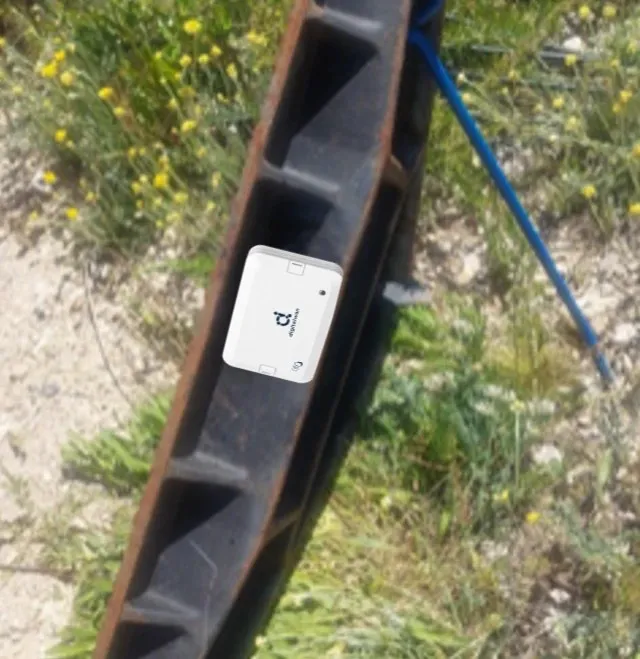
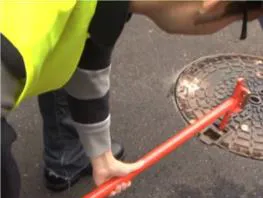
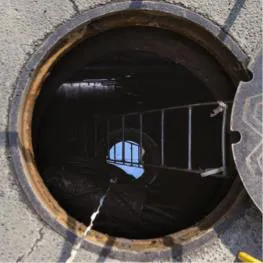
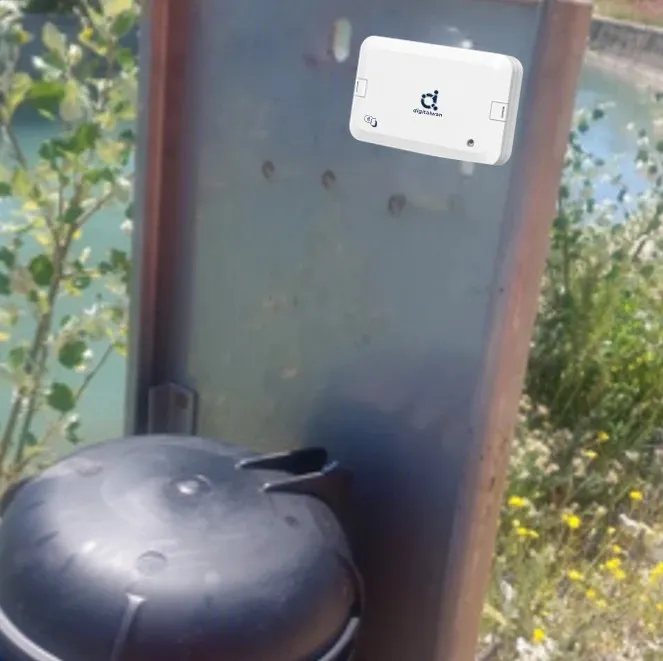
Cable chambers, inspection manholes and fibre splice closures are the way into telecommunications networks. DigitalWan sensors detect every opening in real time and send the alert to the monitoring platform, over LTE-M or LoRaWAN.
What is at stake
Uncontrolled openings, vandalism, mechanical failures or unauthorised work: every undetected access weakens service continuity. Real-time detection helps local authorities and network operators anticipate incidents and plan maintenance better.
Immediate alerts so maintenance teams can react faster.
Real-time tracking of technicians working on the network.
Sharper network monitoring, to anticipate incidents.
Less damage to infrastructure thanks to early detection.
Service continuity maintained in day-to-day operations.
Protection against vandalism and malicious acts.
Reference architectures
Each architecture adapts to the available radio coverage, the number of access points to monitor and the installation constraints.
Architecture 1 · Splice closures in shared ducts
One MSU-XD7 standalone unit per closure reports directly to the monitoring platform over LTE-M, with no gateway and no master unit.
Cable chamber in shared ducts
Operator mast
Sends sensor data straight to the application
DigitalWan monitoring
Statuses, events, closure openings and alarms in one place
Architecture 2 · Splice closures in shared ducts
SU-CD7 sensors monitor closure openings and transmit over LoRaWAN to an MSU-MD7 master unit, which aggregates the data and forwards it over LTE-M.
Cable chamber in shared ducts
MSU-MD7 master
Collects the data and handles transmission
Operator mast
Sends sensor data straight to the application
DigitalWan monitoring
Closure alarms, openings, movement and chamber events
Architecture 3 · Operator-owned ducts
Depending on the number of covers and closures, the MSU-MD7 master unit sits inside the chamber or nearby, while the slave sensors monitor the access points. Data reaches the monitoring platform over LTE-M.
Shared principle: size the slave sensors according to the access points to monitor, then place the master unit inside the chamber or nearby, depending on radio quality and installation constraints.
Detection modes
Depending on the configuration, each sensor runs two of the following detection modes.
Change of orientation on three axes compared with a reference position.
Movement of the sensor, measured by the built-in accelerometer.
Vibrations detected by the built-in accelerometer.
Presence detection using infrared.
Change in light or lighting conditions, for example when a cover is opened.
Detection of hydrogen sulphide.
Geolocated tracking of fibre optic cable deployment, metre by metre.
Products used
One standalone unit or slave sensor per access point to monitor, and a master unit when data needs to be aggregated locally.
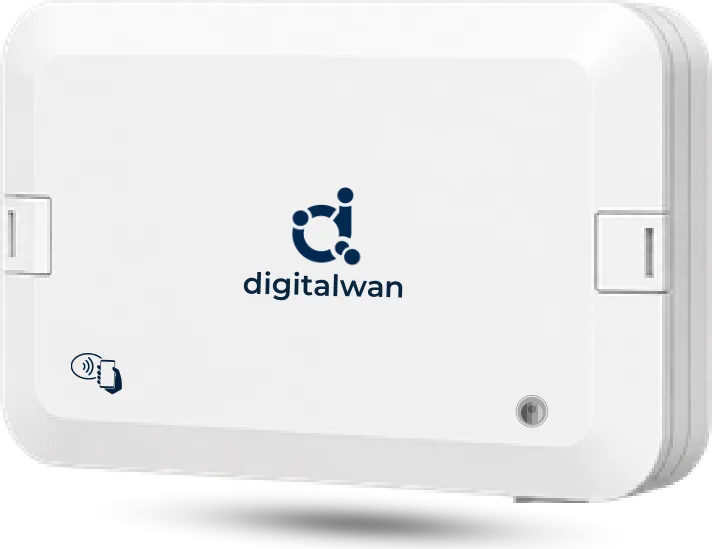
Multi-sensor standalone unit
Direct transmission, with no intermediate equipment
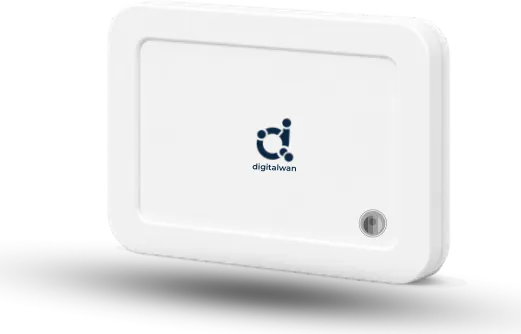
Ultra-flat slave sensor
Smaller than a bank card
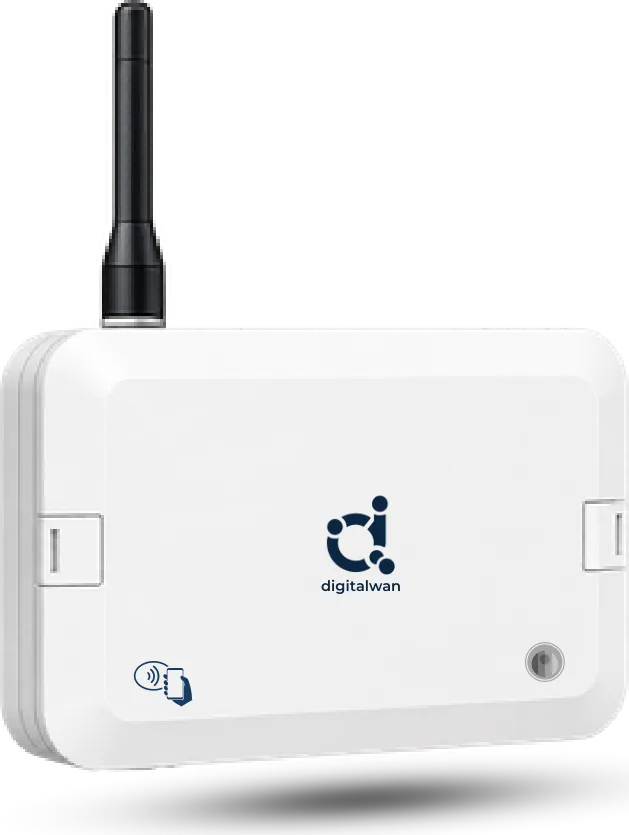
Multi-sensor master unit
The heart of your sensor network
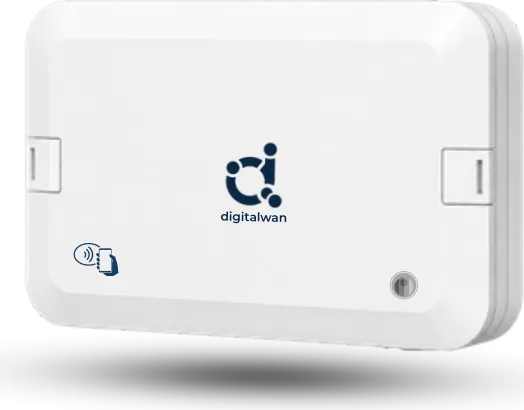
Multi-sensor slave unit
Add as many measurement points as you need
Glossary
The terms worth knowing when preparing a chamber and closure monitoring project.
Frequently asked questions
Answers to the most common questions before starting a deployment.
By fitting a DigitalWan sensor on the splice closure or on the access covers. Depending on the configuration it combines two detection modes, for example movement and change in light, and sends a real-time alert to the monitoring platform.
No, if LTE-M coverage reaches the chamber: one MSU-XD7 standalone unit per point to monitor reports directly to the monitoring platform. Otherwise an MSU-MD7 master unit placed nearby, on a mast or a bracket, collects the sensors over LoRaWAN and forwards the data over LTE-M.
The MSU-SD7 goes inside the closure or is strapped around it with two cable ties. The very compact SU-CD7 clips behind a splice tray.
The number of slave sensors follows the access points to monitor (covers, closures); the master unit is then placed inside the chamber or nearby, depending on radio quality and installation constraints. An MSU-MD7 master unit handles up to 5 slaves.
Data centres, technical shelters, confined spaces, technical buildings and warehouses, as well as wastewater structures and district heating networks.
Tell us the type of civil works, the number of chambers and the access points to monitor: we will suggest the right architecture.