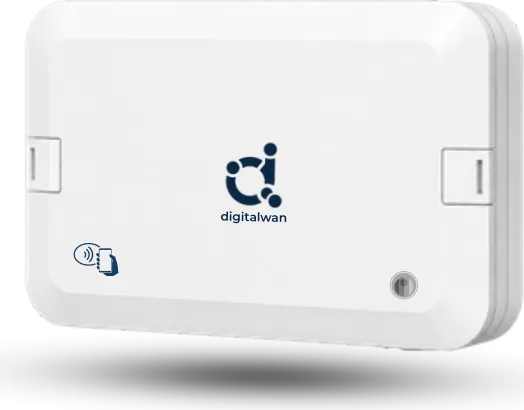
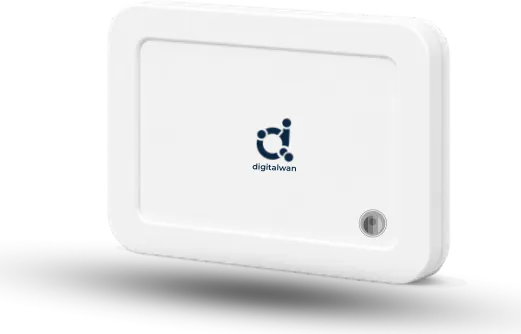
Up to 10 years of battery life
Low-power design: fewer site visits and lower operating costs.

The MSU-MD7 is the master unit of the range: a low-power wireless sensor that measures several parameters, collects data from up to 5 slave units (MSU-SD7 or SU-CD7) over LoRaWAN and forwards it to the gateway or straight to the platform over LTE-M / Cat-1 bis. On battery, it runs for up to 10 years.
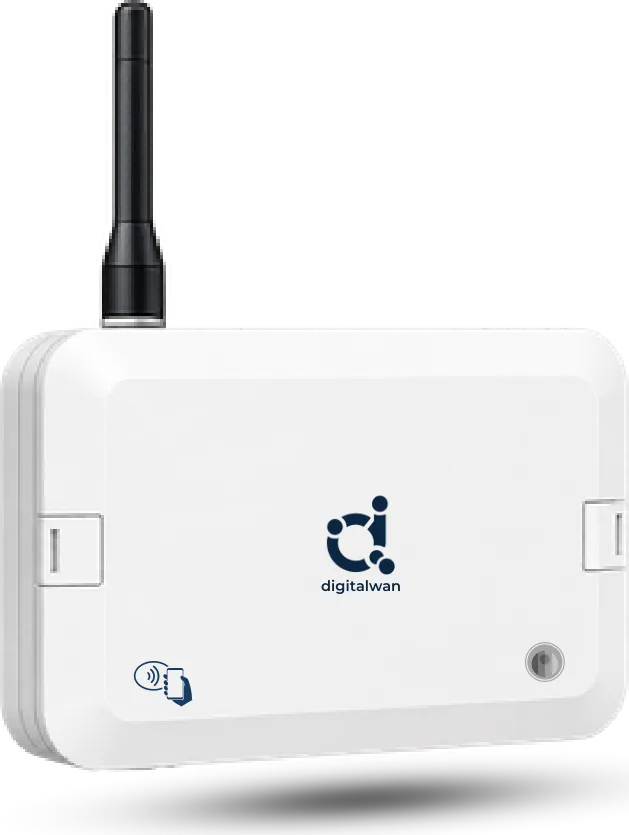
Highlights
Low-power design: fewer site visits and lower operating costs.
Collects readings from up to 5 slave units and relays them to the platform over LTE-M.
LoRaWAN and LTE: a backup communication path keeps data flowing without interruption.
An IP68 UV-resistant polycarbonate enclosure, built for the most demanding industrial environments.
Description
Its redundant architecture is built on two stacked boards, a main board and an LTE daughter board, both double-sided.
Thanks to its cable gland, the MSU-MD7 accepts an external probe: two independent channels, each configurable as a wired probe or a dry contact.
In telecom chambers it sits inside the chamber or away from it on a mast or bracket, depending on radio quality and installation constraints.
| Enclosure | IP68, UV-resistant polycarbonate |
|---|---|
| Impact protection | IK08IK rating |
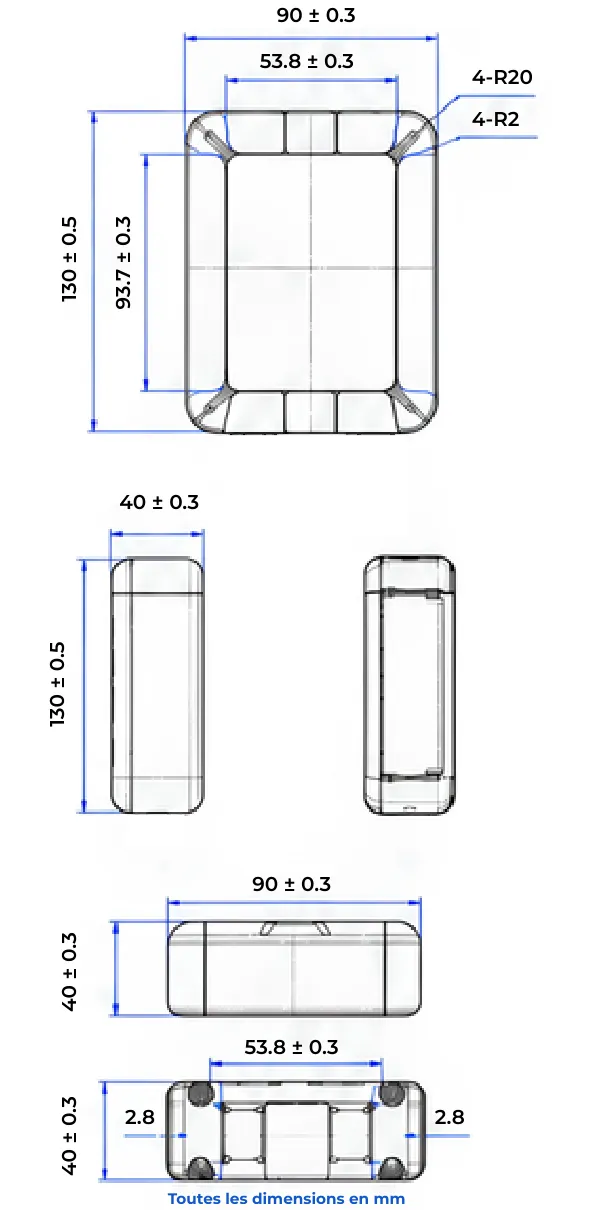
| Dimensions | 130 × 90 × 40 mm |
| Weight | 180 gdepending on the configuration |
| Mounting | Wall or pole mounted |
| Sensors | Temperature, light, accelerometer (movement, inclination), 60 GHz radar |
| External inputs | 2 channels: wired probe or dry contact |
| Communication | LoRaWAN, LTE-M, LTE, LTE Cat-1 bis, NFC |
| Cellular | eSIM STYSIM-200M, SGP.02 |
| Range | 5 to 10 kmdepending on the environment |
| Power supply | 3.6 V lithium battery |
| Battery life | Up to 10 yearsdepending on the configuration |
| Cable gland | Reserved for an external probe |
| Frequencies | EU868, US915, AS923 |
| Certifications | CE, RoHS |
| Probe protocols | I2C, PSI |
| Design | Developed in France |
Specifications are provided for guidance and may vary depending on the configuration.
MSU-MD7 datasheetPDF, 1.1 MBFrequently asked questions
Answers to the most common questions before choosing this device.
Up to 5 slave units, MSU-SD7 or SU-CD7.
Not necessarily: with its eSIM and LTE daughter board it can send data straight to the platform over the mobile network (LTE-M or Cat-1 bis). It can also go through an MSU-SG7 or MSU-G7 gateway over LoRaWAN.
Up to 10 years on a 3.6 V lithium battery, depending on the configuration: how often it measures and transmits.
Yes. Two independent channels accept a remote wired probe (temperature, level, ultrasonic, humidity) or a dry contact (opening, alarm, limit switch, pulse counting).
Read more
60 GHz radar, ultrasonic or pressure probe: how to measure the level of a tank, reservoir or container remotely, and how to avoid false readings.
3 minHow does a battery-powered IoT sensor run for ten years? The role of the lithium cell, transmission frequency, network choice and temperature, explained simply.
3 minLoRaWAN or LTE-M for an industrial IoT sensor deployment: range, battery life, cost and coverage. The criteria that matter, with three real-world cases.
3 minRange
Tell us your quantities and your installation context: we will come back to you with a tailored proposal.