“Up to 10 years of battery life”: the promise appears on every industrial sensor datasheet. It is realistic — provided you understand what it depends on. Across a hundred sensors, the gap between a good and a bad configuration is measured in dozens of site visits.
The cell does not decide, usage does
A given cell holds a fixed amount of energy. Battery life is simply the result of a division: that reserve divided by the average power draw. And in an IoT sensor, consumption is spread very unevenly:
- Sleep takes up more than 99% of the time and a tiny share of the energy;
- Measuring costs little, except for active sensors such as a radar;
- Radio transmission is by far the biggest item, in very short but intense current peaks.
The direct consequence: cutting the number of transmissions extends battery life far more effectively than cutting the number of readings. A sensor that measures every ten minutes but only sends a daily summary, or only sends alerts, will outlast one that transmits every single reading by years.
Why lithium thionyl chloride
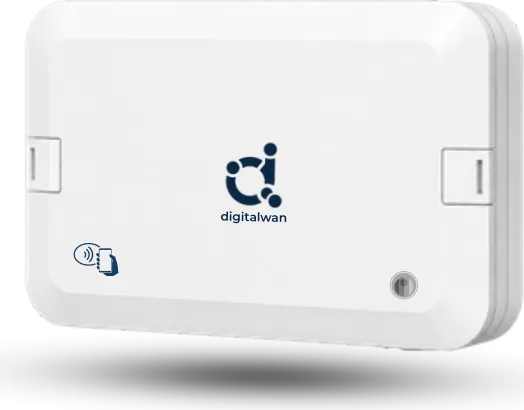
Sensors designed to last a decade almost all use a 3.6 V Li-SOCl2 cell — for example an ER18505M in the DigitalWan range. Three reasons:
- High energy density: a lot of capacity in a small format;
- Very low self-discharge, around 1% per year: after ten years on a shelf, the cell still holds most of its charge;
- A very stable voltage for almost the whole service life, which simplifies the electronics — but makes the remaining charge harder to read than on a phone battery.
Their quirk: passivation. At rest, a thin layer forms on the anode surface and protects the cell. It clears on the first demand, but explains why a long-idle sensor responds slightly slower on its first wake-up.
The network shapes the energy bill
For the same message, not all links are equal. A short LoRa transmission draws noticeably less than a cellular exchange, which means waking a modem, attaching to the network, then transmitting — often at higher power.
That is why a well-designed architecture puts the constraint in the right place:
- slave units transmit over LoRa, which is very frugal, to a master unit;
- the master unit gathers the data from several sensors and handles the cellular link on its own;
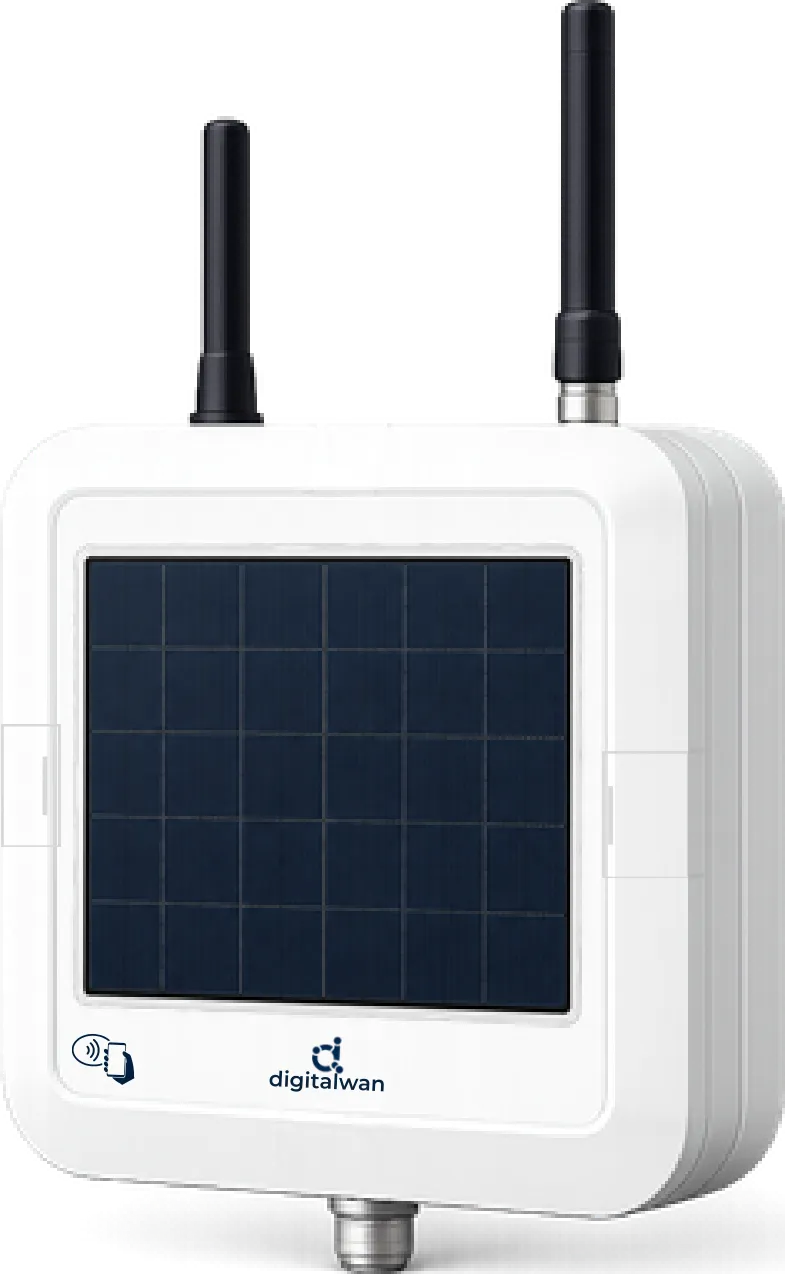
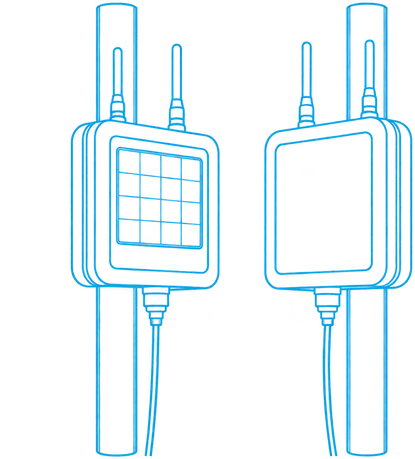
- where power is not an issue, a solar gateway listens continuously and removes the battery constraint from the collection network altogether.
The detail that matters: a battery-powered master unit does not listen all the time. It opens scheduled listening windows, which lets it act as a collector without burning through its energy reserve.
Four settings to get right at deployment
- The measurement interval: the longest one that still meets the real need. A tank level does not need a reading every minute.
- The transmission policy: on threshold and on alert rather than continuously. The vast majority of readings change no decision.
- The active detection modes: every extra mode wakes the sensor more often.
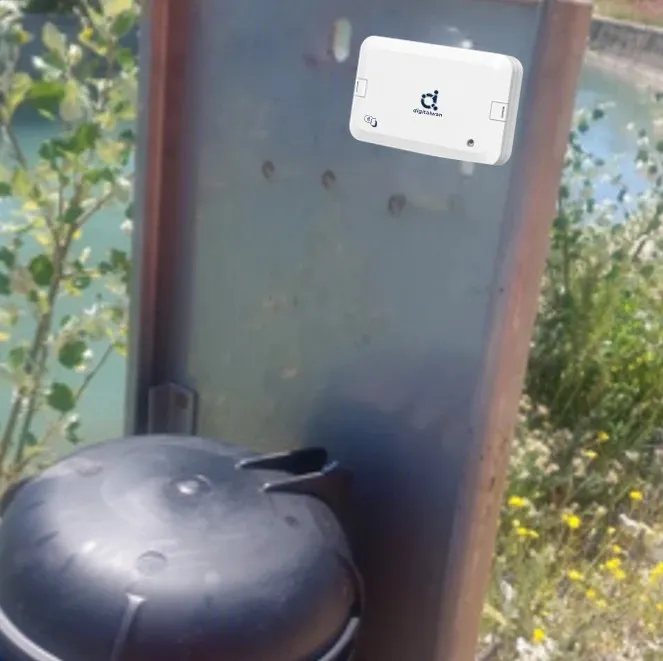
- The site temperature: a buried structure is thermally stable, an enclosure in full sun far less so.
The real subject: maintenance cost
Across a hundred sensors, going from six to ten years of battery life is not gaining four years: it removes an entire replacement campaign, with its travel, its structure openings and its service interruptions. That is where the total cost of a deployment is decided — far more than on the unit price of the sensor.
Before ordering, have the battery life estimated for your configuration, not in the abstract.
Frequently asked questions
What is a Li-SOCl2 cell?
A non-rechargeable lithium thionyl chloride cell with a nominal voltage of 3.6 V. It offers high energy density and very low self-discharge, around 1% per year, which makes it the reference for sensors meant to stay in place for ten years without maintenance.
Why say “up to 10 years, depending on the configuration”?
Because battery life depends on how the device is set up: how many readings per day, how many transmissions, which network, and the site temperature. Two identical sensors can last three years or ten years depending on their configuration.
Does cold weather reduce battery life?
Cold temporarily reduces the available power and can increase cell passivation, which shows up as a voltage drop during current peaks. The stored energy is still there, but transmitting in very cold weather is harder on the cell.