Gateway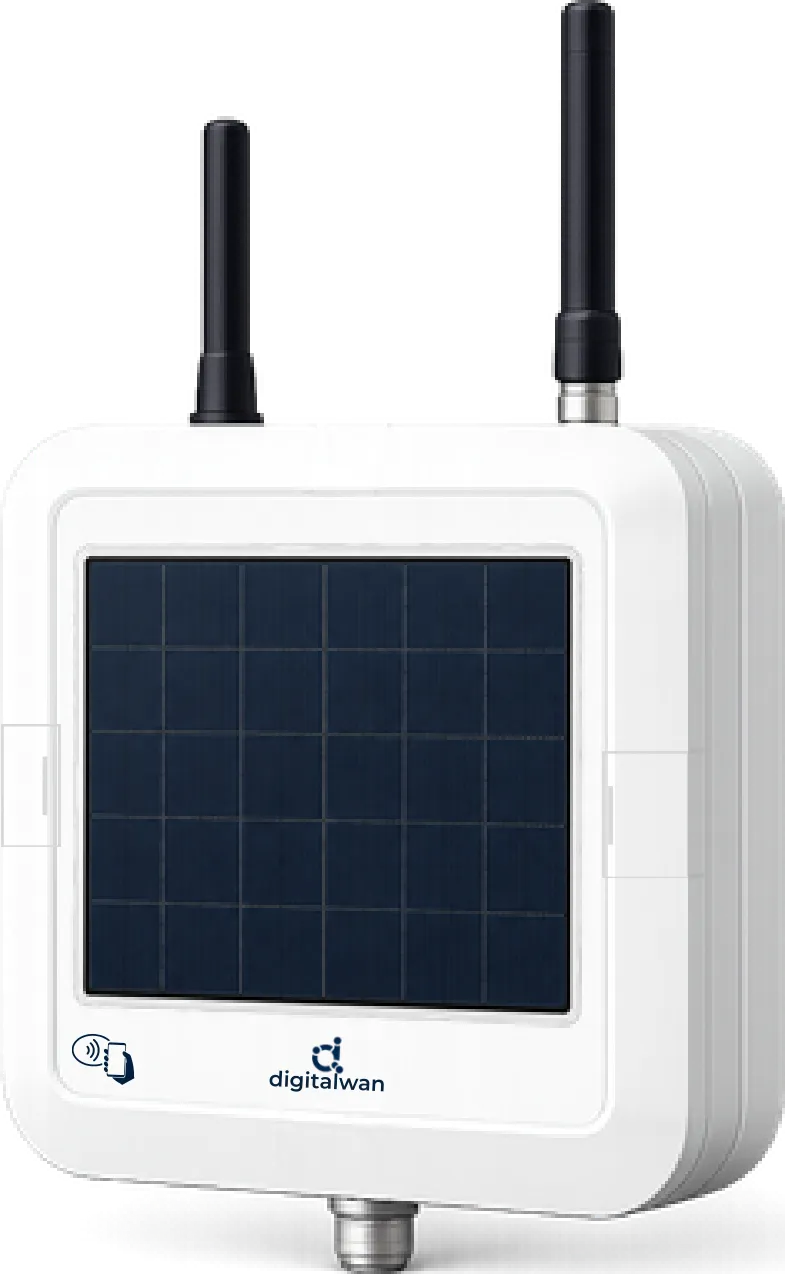
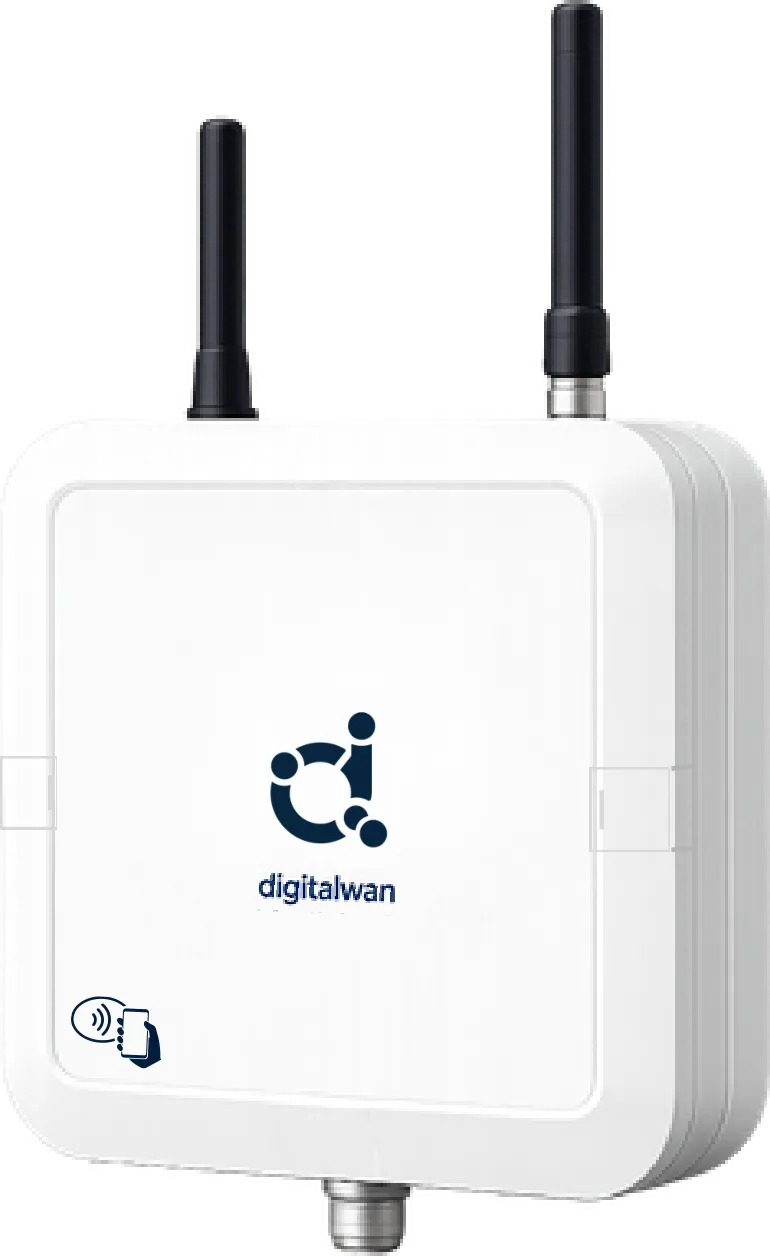
Multi-sensor solar gateway
MSU-SG7
The self-powered gateway for remote sites
- Power
- Solar
- Network
- LoRaWAN · LTE-M
- Range
- 5 to 10 km

Sense · Connect · DecideVersion 2.1
Multi-sensor LoRaWAN, LTE-M and NFC devices, IP68 enclosures and up to 10 years of battery life: DigitalWan supplies a complete range, from the solar gateway to the ultra-flat sensor and a connected padlock, all with embedded artificial intelligence.
Dual LoRaWAN + LTE-M antennaLong range and cellular network
Built-in solar panelAutonomous, continuous operation
IP68 enclosureFor the most demanding environments
Multi-sensor4 built-in sensors, 2 external channels
Sense · Connect · Decide
DigitalWan senses the physical world, connects it through a self-sufficient wide-area network and makes it intelligent: intelligence at the heart of your assets.
Every device carries 4 sensors wired in series and accepts external measurements, so you track what really matters on your sites.
A self-sufficient wide-area network: sensors talk to each other over LoRa and send their data over LoRaWAN or the mobile network.
The platform turns every reading into usable information: your assets are no longer simply monitored, they inform your decisions.
Product range
Gateways, a master unit, standalone units and slave units built for a wide range of industrial monitoring needs, working on their own or together within the same network.
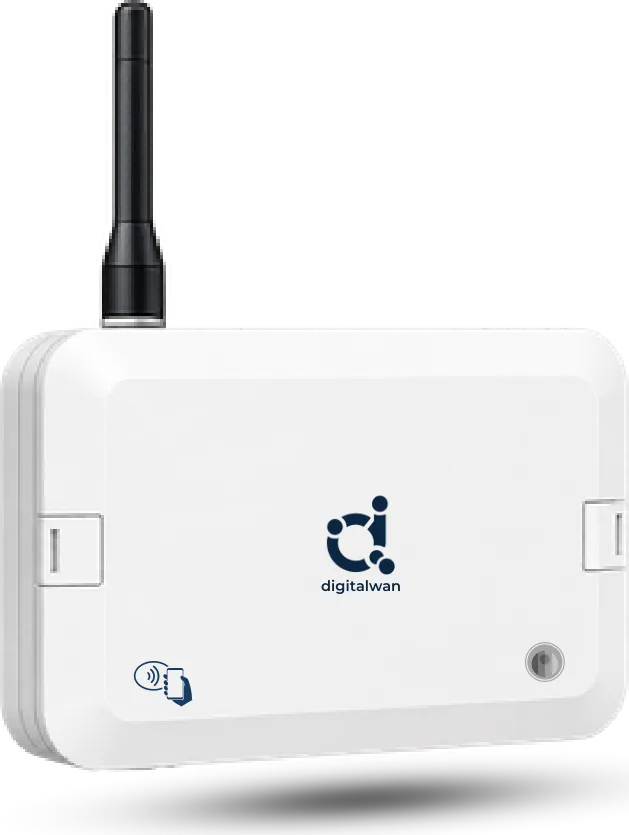
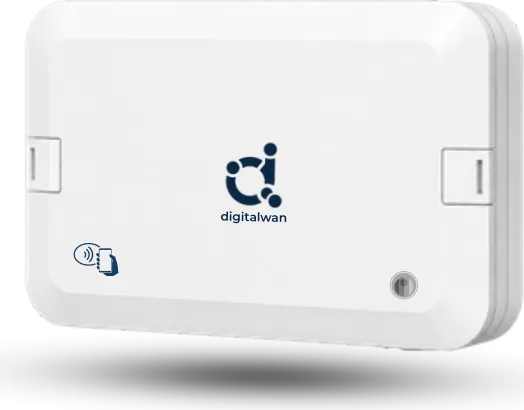
Multi-sensor master unit
The heart of your sensor network
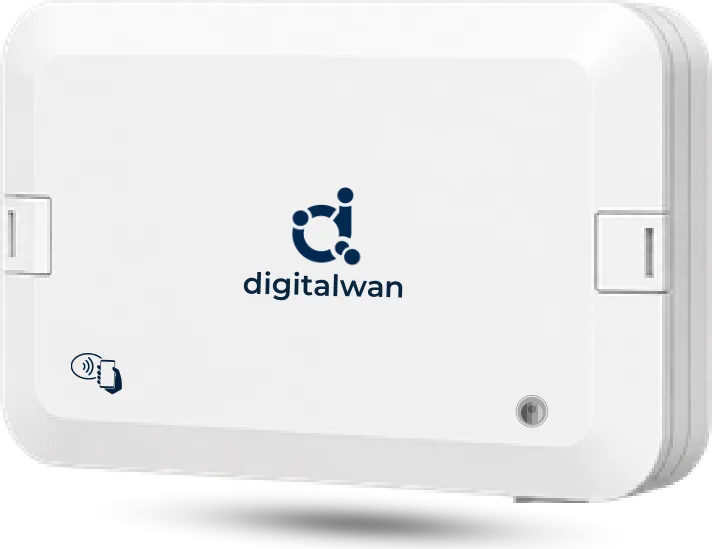
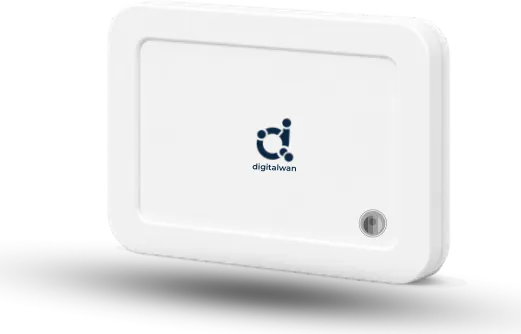
Multi-sensor standalone unit
Direct transmission, with no intermediate equipment
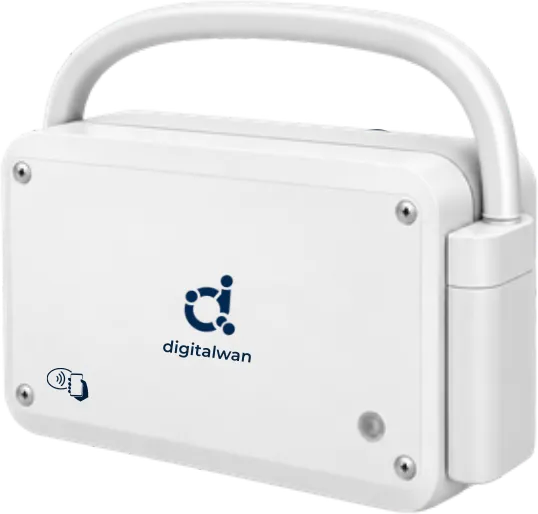
Multi-sensor padlock unit
The connected padlock, standalone over LTE-M
The main characteristics of the available devices, side by side.
| Characteristic | MSU-SG7Multi-sensor solar gateway | MSU-G7Multi-sensor PoE gateway | MSU-MD7Multi-sensor master unit | MSU-XD7Multi-sensor standalone unit | MSU-LD7Multi-sensor padlock unit | MSU-SD7Multi-sensor slave unit | SU-CD7Ultra-flat slave sensor |
|---|---|---|---|---|---|---|---|
| Connectivity | LoRaWAN, LTE-M, Cat-1 bis, NFC | LoRaWAN, LTE-M, Cat-1 bis, NFC | LoRaWAN, LTE-M, Cat-1 bis, NFC | LTE-M, NFC | LTE-M, NFC | LoRa, LoRaWAN, NFC | LoRaWAN |
| Power supply | Solar, PoE / 12 V | PoE / 12 V | 3.6 V lithium battery | 3.6 V lithium battery | 3.6 V lithium battery | 3.6 V lithium battery | 3 V coin cell |
| Battery life | Up to 10 years | Up to 10 years | Up to 10 years | Up to 10 years | Up to 10 years | Up to 10 years | Up to 10 years |
| Range | 5 to 10 km | 5 to 10 km | 5 to 10 km | – | – | 5 to 10 km | 500 m |
| Enclosure | IP68, IK08 | IP68, IK08 | IP68, IK08 | IP68, IK08 | IP68, IK08 | IP68, IK08 | IP65, IK06 |
| Dimensions | 200 × 200 × 45 mm | 200 × 200 × 45 mm | 130 × 90 × 40 mm | 100 × 75 × 29 mm | 100 × 75 × 29 mm | 100 × 75 × 29 mm | 70 × 50 × 15 mm |
| Weight | 300 g | 300 g | 180 g | 110 g | 110 g | 110 g | 50 g |
The solution architecture
A complete, scalable and secure IoT architecture: slave units, master unit, gateway or mobile network, standalone LTE-M units and a monitoring platform.
SU-CD7 and MSU-SD7 · Slave units
To the master unit, or straight to the gateway over LoRaWAN
MSU-MD7 · Master unit
Measures, collects up to 5 slaves and relays the data
MSU-SG7 gateway or GSM relay
Continuous listening or mobile network, with no local infrastructure. The MSU-XD7 and MSU-LD7 standalone units transmit straight to the mobile network over LTE-M.
DigitalWan platform
Monitoring, alerts and API, on web and mobile
Applications
Versatile measurements to monitor scattered assets: telecom networks, cities, industry or open countryside.
Opening detection on chambers, manholes and fibre splice closures, technician tracking and real-time alerts.
See the reference architectures
Radar fill-level readings for containers, cabinet and manhole opening, vandalism detection.

Equipment monitoring, alarms and limit switches through dry contacts, pulse counting and temperature tracking.

Tank and reservoir levels, remote level probes, opening of manholes and technical rooms.

Monitoring of manholes and structures, with H2S gas detection depending on the configuration.

Monitoring of structures and technical rooms: openings, temperature and real-time alerts.
Substations and technical cabinets, pulse counting on meters, off-grid sites covered by a solar gateway.

Temperature and humidity through wired probes, tank levels and a self-powered solar gateway in the field.

Temperature and light readings, remote humidity probes and alerts when measurements drift.
Platform and app
The DigitalWan web portal and mobile app turn every connection into clarity, every sensor into information and every asset into value.
A real-time overview of the deployment, from a web or mobile control screen.
Real-time alert notifications, with callouts triggered and followed up in the platform.
Check the status of every device, choose its detection modes and update it remotely.
Browse, search and export measurements as tables and charts.
Configurable weekly or monthly reports, together with key performance indicators.
Secure API keys to feed the data into your own business applications.
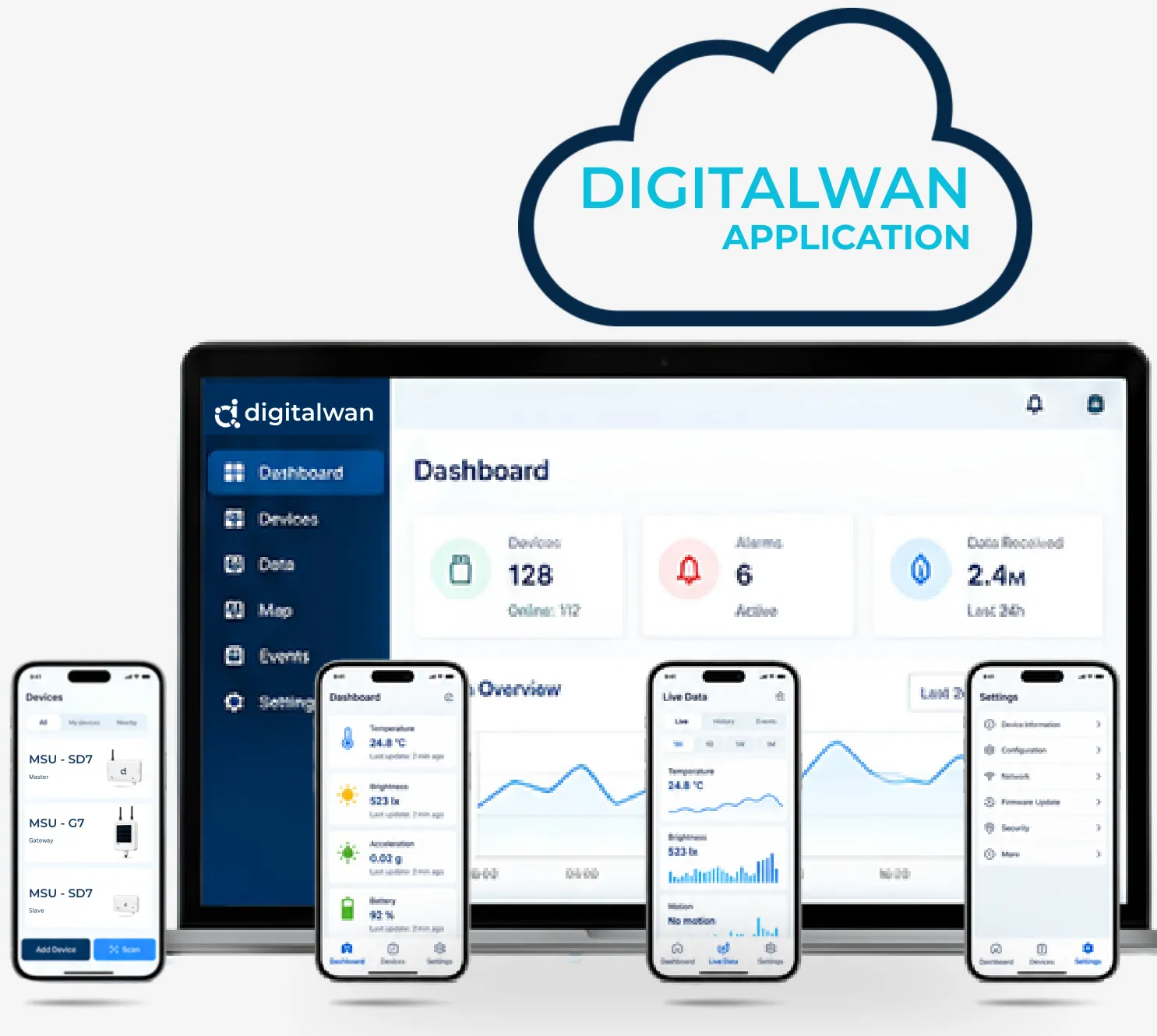
From data to decision — Digitalwan turns every connection into clarity, every sensor into intelligence and every asset into value.
Sense . Connect . Decide
Frequently asked questions
Can’t find the answer to your question? Our team will get back to you.
Contact usA range in four families: two gateways (the solar MSU-SG7 and the PoE MSU-G7), one master unit (MSU-MD7), two standalone LTE-M units (MSU-XD7 and its padlock version, the MSU-LD7) and two slave units (MSU-SD7 and the ultra-flat indoor SU-CD7). Every device carries the same 4 built-in sensors: temperature, light, accelerometer and 60 GHz radar.
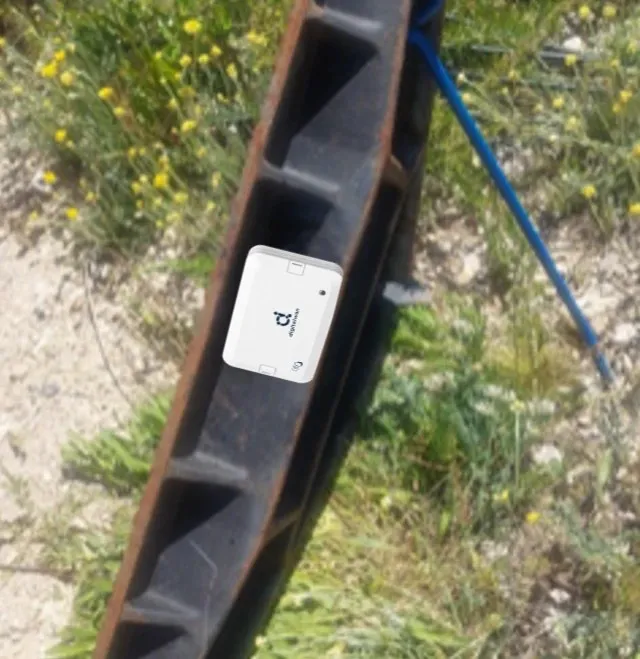
Yes. Fitted on splice closures or on chamber covers, they detect every opening and send the alert in real time over LTE-M or LoRaWAN. Three reference architectures cover shared optical local loop ducts and operator-owned civil works.
LoRaWAN is a long-range, very low-power radio network used to link the sensors to each other and to the gateway over several kilometres, with no subscription. LTE-M (and LTE Cat-1 bis) uses a mobile operator network, which sends data straight to the platform without any local gateway.
Depending on the configuration, each sensor runs two detection modes at the same time, chosen from inclination, movement, vibration, infrared presence, change in light, H2S gas and cable drum unwinding. The modes are selected from the platform.
Up to 10 years depending on the configuration, meaning how often measurements and transmissions take place. The MSU-SG7 gateway recharges from its solar panel, and the MSU-G7 gateway is powered over PoE or 12 V.
Yes: the MSU-SG7 and MSU-G7 gateways and the MSU-MD7, MSU-XD7, MSU-LD7 and MSU-SD7 units come in IP68 UV-resistant polycarbonate enclosures. The ultra-flat IP65 SU-CD7 is intended for indoor or sheltered environments.
DigitalWan sensors are developed in France. They comply with CE and RoHS requirements.
Through the DigitalWan web portal and the Android and iOS mobile app: dashboards, real-time alerts, reports and indicators, remote device management and API access for your own tools.
No. Devices fitted with an eSIM transmit over the mobile operator network (LTE-M in Europe, Cat-1 bis in Africa) with no local infrastructure. A LoRaWAN gateway remains an option for very large sites or areas with poor coverage.
Resources
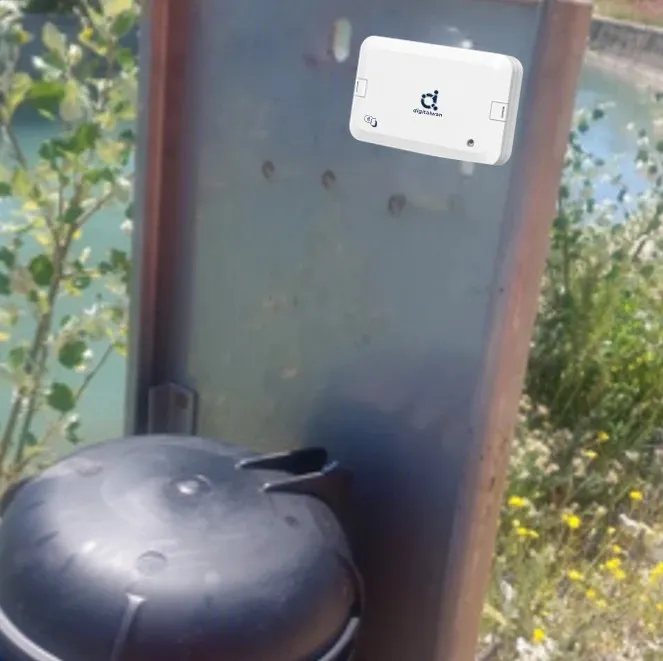
Choosing a network, battery life, sealing, level measurement: what to know before deploying.
3 min read
60 GHz radar, ultrasonic or pressure probe: how to measure the level of a tank, reservoir or container remotely, and how to avoid false readings.
3 min read
How does a battery-powered IoT sensor run for ten years? The role of the lithium cell, transmission frequency, network choice and temperature, explained simply.
3 min read
What does IP68 actually mean on an industrial sensor? A breakdown of the two digits, the common pitfalls, and how to choose between IP65 and IP68 on site.
Tell us about your site and what you need to measure: we will point you to the right combination of sensors and send you a detailed quote.