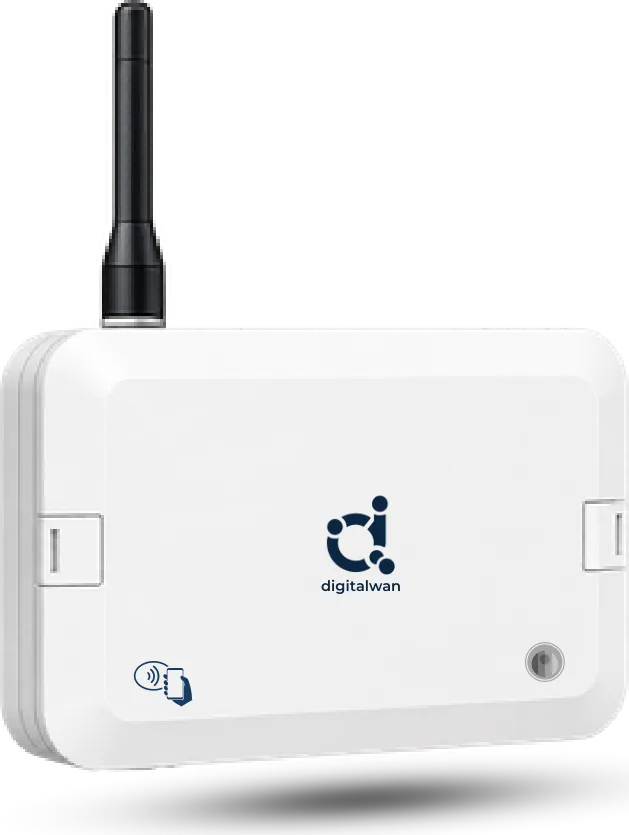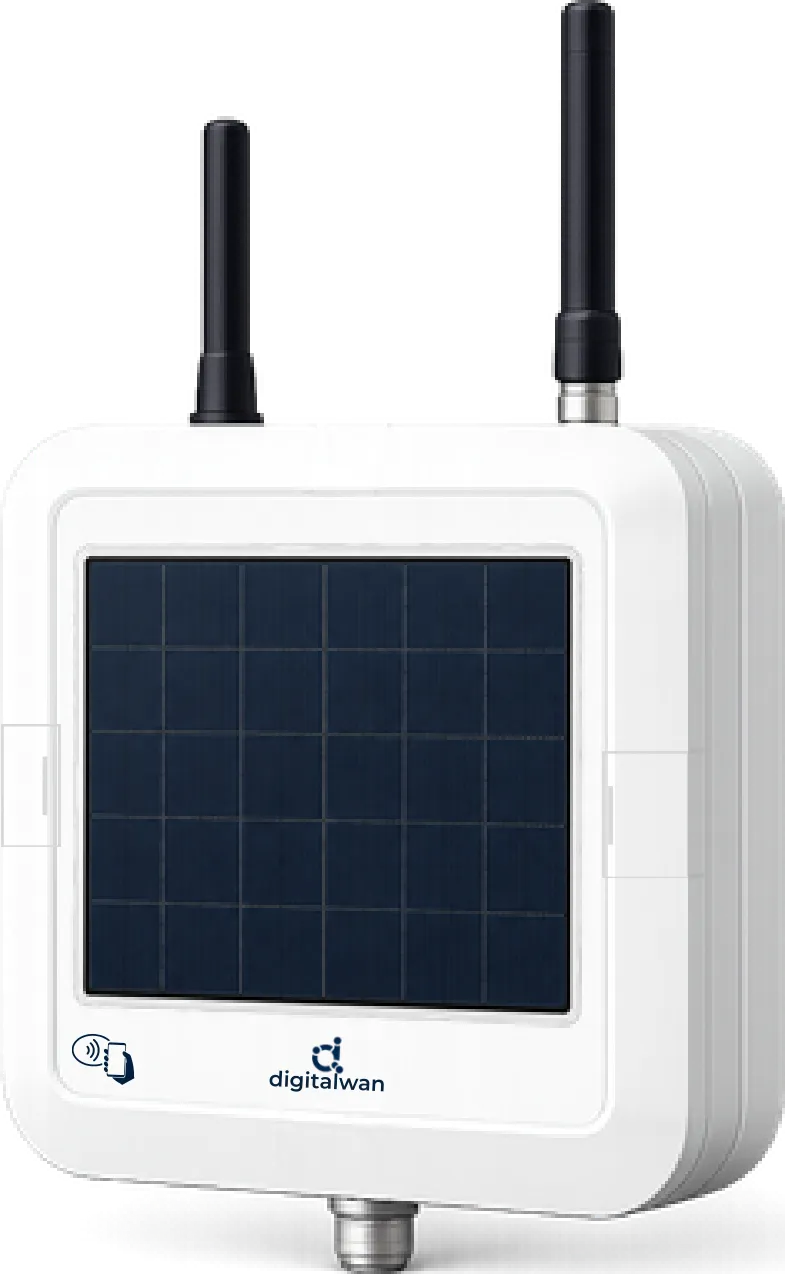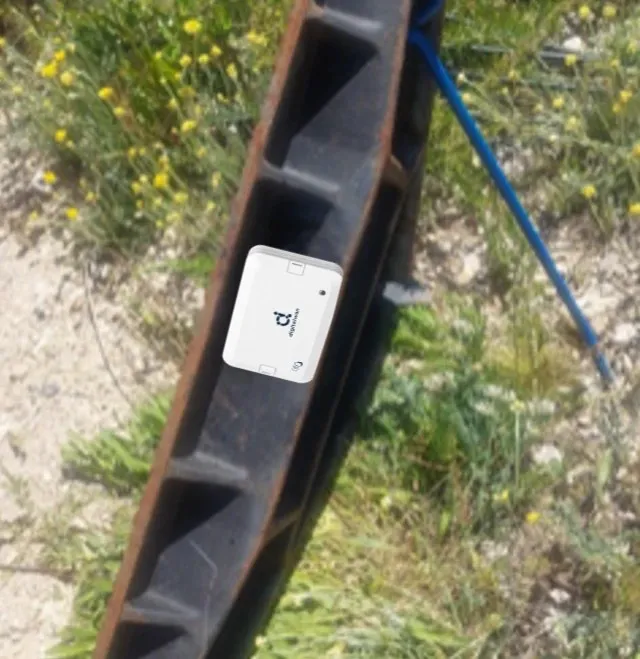
Knowing remotely how much is left in a tank avoids two costly situations: the pointless check-up round, and the overflow. Now that millimetre-wave radars are built directly into IoT sensors, that reading no longer requires a specialist installation.
How a 60 GHz radar works
The principle is that of sonar, but with radio waves: the sensor emits a pulse at 60 GHz and measures how long the echo takes to return after bouncing off the surface of the product. That time gives the distance, and the distance gives the level.
At that frequency the antenna fits in a few square millimetres, which is why a radar can sit inside a standard sensor enclosure alongside temperature, light and the accelerometer.
Its strengths in service:
- No contact with the product: nothing fouls, nothing corrodes;
- Unaffected by dust, vapour and darkness, unlike an optical reading;
- Unaffected by air temperature, unlike ultrasonic sensors whose speed of propagation varies;
- Frugal with energy, with very short pulses compatible with battery operation.
What it actually measures
A radar measures a distance to the first surface that returns an echo — and that is the whole subtlety. Three classic pitfalls:
- Foam. On a foaming effluent, the echo may come back from the foam rather than the liquid. The reading is not wrong, it is simply not measuring what you think.
- Internal obstacles. An agitator, a ladder or an inlet within the radar’s field creates spurious echoes. Aim at a clear area.
- Very agitated or sloping surfaces scatter part of the signal elsewhere, which reduces the usable range.
The same radar has another use: aimed at the floor or at an opening rather than a product, it becomes a presence detector. That is what allows one sensor to monitor both the level of a container and someone entering a technical room.
Radar, ultrasonic or probe: the right choice per use
| Need | Best suited solution |
|---|---|
| Water or fuel tank level | Built-in radar |
| Waste container fill level | Built-in radar |
| Heavily foaming liquid | Remote level probe |
| Reading under head pressure, at the bottom of a structure | Remote probe (pressure) |
| Long-range distance in open air | Remote ultrasonic probe |
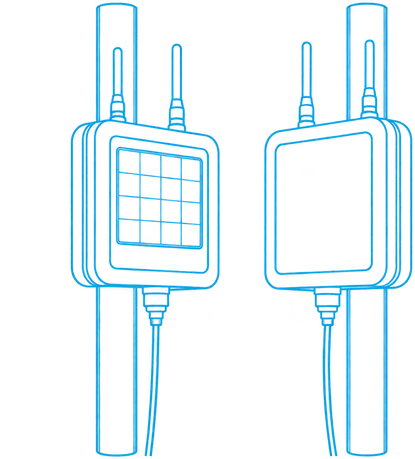
This is why the MSU-MD7 and MSU-SD7 units combine both approaches: a built-in 60 GHz radar, plus two external channels that accept a remote wired probe — temperature, level, ultrasonic, humidity — or a dry contact. No irreversible choice at order time.
Getting the installation right
- Aim at a clear area, away from walls, ladders and product inlets.
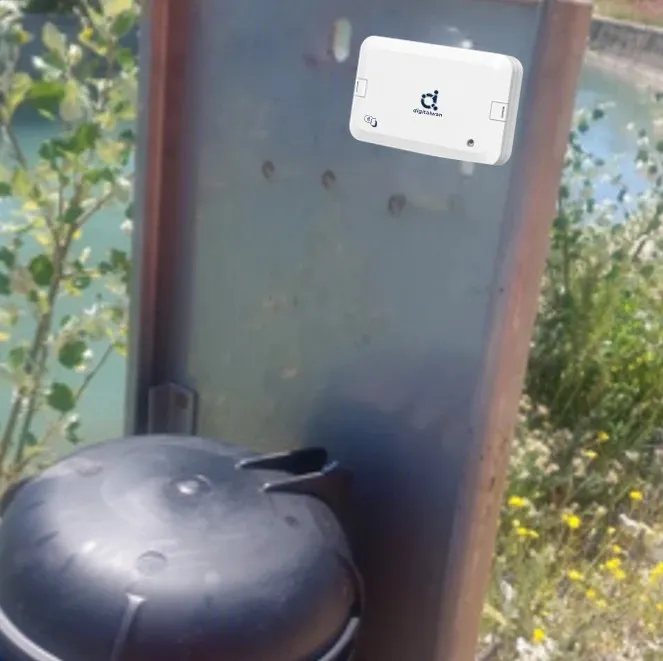
- Mount the sensor rigidly: an enclosure that vibrates or rotates makes the reading drift.
- Record a reference, tank empty then tank full, to calibrate the scale once and for all.
- Set alerts on thresholds, not on every reading: an alert at 20% remaining is useful, a minute-by-minute history is not — and it costs battery life.
The real gain: removing the round trip
The return on a level measurement is not calculated on accuracy, but on the journeys avoided. As soon as a site is more than half an hour away, two or three check-up rounds saved per year are often enough to justify the equipment — not counting the overflow that will not happen.
Do you have tanks or containers to monitor? Describe the context and we will point you to the right sensor and probe combination.
Frequently asked questions
Does a 60 GHz radar measure through plastic?
Yes, to an extent: the waves pass through non-conductive materials such as plastic, which sometimes allows the sensor to be fitted above a lid rather than inside the tank. Thickness and material do change the signal, so an on-site trial remains essential.
Radar or ultrasonic for level measurement?
Ultrasonic sensors are sensitive to temperature, wind and air turbulence. Radar is unaffected by those conditions and stays stable in dust or vapour. Ultrasonic keeps an edge at certain long ranges and remains available as a remote probe.
What accuracy can be expected?
A 60 GHz proximity radar provides millimetre-level distance readings in good conditions. In the field, usable accuracy depends mostly on how stable the installation is and on the surface being measured: thick foam or a very agitated surface degrade the signal.